
Every child is born with different potential and a different way of learning. Some children love observing the world around them, some love asking questions, and others learn best while playing. To meet these different needs, Multimedia Nusantara School (MNS) combines the Montessori and Reggio Emilia approaches to support children's overall growth from an early age, starting at the Preschool level. This combination helps children not only understand basic concepts, but also build critical thinking, creativity, independence, and self-confidence — skills that will serve them well in the future.
Two Approaches That Work Together
Montessori and Reggio Emilia are two early childhood education approaches that are widely recognized around the world.
Montessori focuses on learning through real, hands-on experiences. Children use learning tools and real objects they can see, touch, and explore themselves. This makes it easier for them to understand concepts related to the world around them.
Reggio Emilia sees children as active learners. They are encouraged to ask questions, explore, share their opinions, and discover different possibilities in what they're learning. This approach builds curiosity along with deeper thinking skills.
At Multimedia Nusantara School (MNS), these two approaches work together. Children first understand a concept through hands-on experience (Montessori), and are then encouraged to explore and find deeper meaning in that concept (Reggio Emilia). This makes learning more complete, meaningful, and supportive of a child's overall growth.
Learning Through Experiences Close to a Child's World
Every activity at MNS is designed to be easy to understand, engaging, and relevant to children's everyday lives. In class, teachers use different learning tools — objects, educational videos, and hands-on activities — so children can learn through direct experience.
For example, when children learn about the shape of a circle, the teacher doesn't just explain it or show a picture. Instead, children get to hold and look at real circle-shaped objects. Once they understand the shape, they're asked to find circle-shaped objects around them, showing they've truly understood the concept. This approach helps children build stronger understanding because they're learning through real experience, not just memorizing facts.
In every activity, teachers act as guides who help support children's thinking. Instead of giving all the answers, teachers ask questions that spark curiosity and encourage children to find the answers themselves. Through this process, children learn to think, observe, and share their opinions from an early age.
Play: The Most Natural Way for Children to Learn
For children, play is not just a way to pass the time — it's their natural way of learning, exploring the world, and understanding new things. That's why learning at MNS is often designed around fun, interactive games. When children are happy, they focus better, feel braver trying new things, and are more excited to join in learning activities. Besides helping children understand lessons, playtime also gives them a chance to build social skills — sharing, working together, taking turns, and interacting with friends.
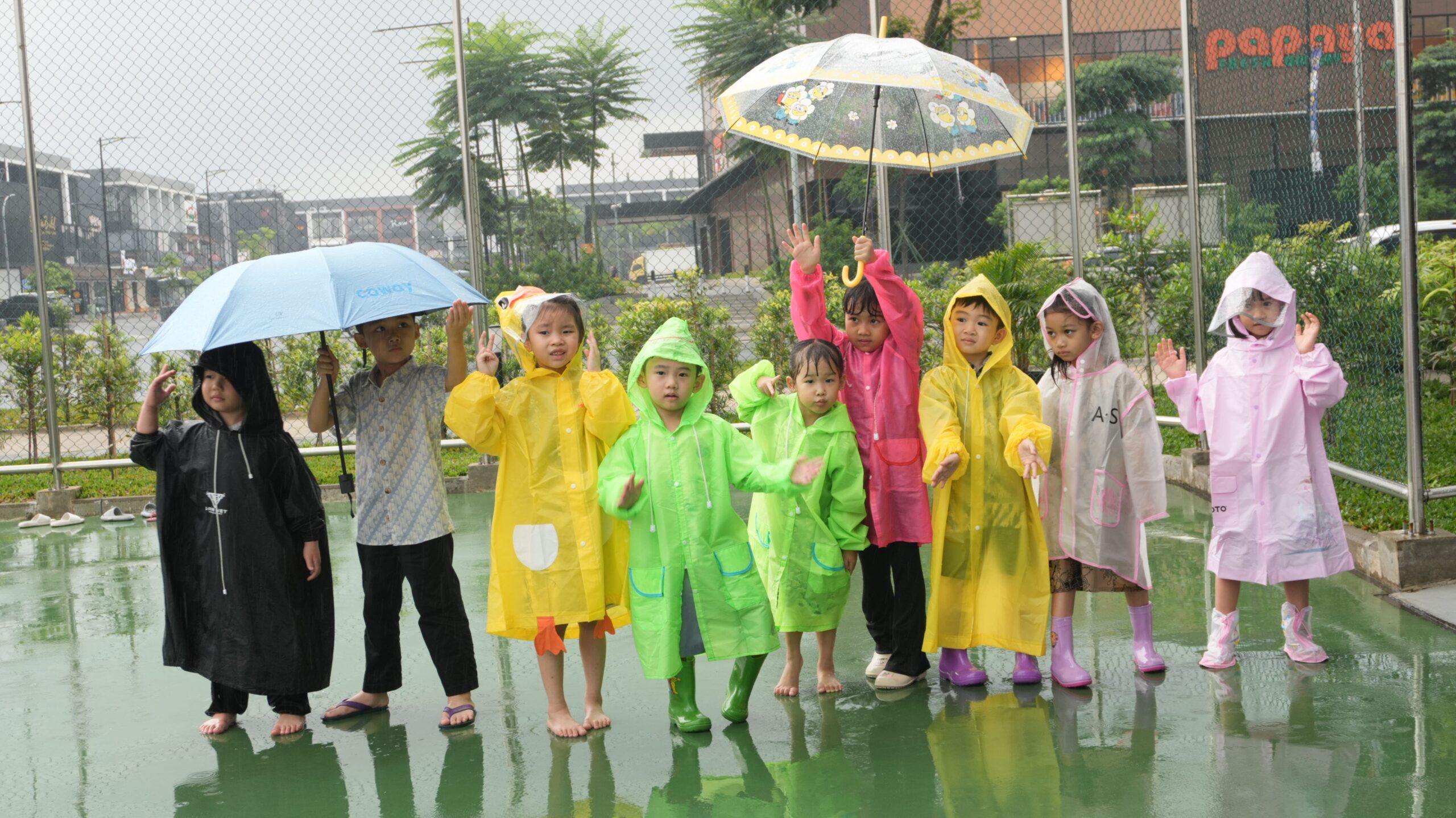
One activity often used is sensory play . Through this, children use their senses to understand a concept. For example, when learning about rain, children don't just listen to the teacher explain it — they also get to experience something similar to rain through water or simple, specially designed simulations.
Each learning topic is also explored through several connected activities. When learning about the solar system, for instance, children might watch an educational video, learn about the shapes of planets using learning tools, look at a globe, and even make a simple craft related to the topic. This approach makes learning both fun and meaningful.
Facilities That Support Children's Growth
To support the best possible learning experience, MNS provides facilities designed around the developmental needs of young children. One of its standout facilities is the Sensory Room— a special space equipped with different learning tools to support children's sensory development, motor skills, balance, and movement coordination.
There's also a playground , one of the children's favorite spots to play and learn at the same time. Through physical activities in this area, children can build motor skills, grow more confident, and learn to interact with friends in a fun setting.
Building Independence from an Early Age
Independence is one of the most important skills to build from an early age. At MNS, children aren't just taught to understand things — they're also guided to do things on their own, at a pace that fits their stage of development. Children practice simple everyday activities like eating by themselves, putting away their own belongings, keeping themselves clean, and completing tasks that are their responsibility.
Teachers also give children the chance to make choices in different situations. Through this, children learn that every choice comes with a consequence they need to take responsibility for. When a child faces a challenge, teachers offer help only when needed, without taking over tasks the child can still do themselves. This approach helps children become more confident and used to finding solutions on their own.
Preparing Children with Life Skills for the Future
Beyond academics, MNS also places strong focus on building life skills that will benefit children throughout their lives. Children learn to build social skills, communicate well, work together in groups, and respect others. They're also introduced to activities that help develop practical, hands-on skills.
One example is the Edu Culinary, program, where children make healthy food through safe, age-appropriate activities. Besides being fun, this activity helps children understand the basics of preparing food while also practicing motor coordination and independence.
MNS also runs entrepreneurship activities specially designed for young children. In these activities, children get to introduce and "sell" their own simple creations to their friends. Through this experience, they learn about responsibility, creativity, communication, and self-confidence.
If you'd like to see how the Montessori and Reggio Emilia approaches come to life in a real learning environment, MNS is ready to be the best partner partner in your child's education journey. Get to know MNS's programs and learning environment more closely, and discover how we help every child grow into the best version of themselves. For more information on MNS admissions and educational programs, parents can contact 08222-888-9773